
Quick answer: Chemical drain cleaners like Drano and Liquid-Plumr use caustic or oxidizing chemicals that generate heat inside your pipes. While they may dissolve part of a clog temporarily, they also corrode pipe walls — especially in older homes with cast iron or galvanized drain lines. Professional drain cleaning with a cable machine or hydro jetting removes the entire blockage without damaging your plumbing.
Why Chemical Drain Cleaners Don't Actually Work
Chemical drain cleaners fall into two categories: caustic (sodium hydroxide-based) and oxidizing (sodium hypochlorite or peroxide-based). Both work by generating an aggressive chemical reaction that produces heat and dissolves organic material. The problem is that the chemical can't distinguish between the clog and your pipes.
Most kitchen clogs are caused by grease that has solidified inside the drain line, often mixed with food particles and soap residue. Chemical cleaners may soften the top layer of this grease plug, but they rarely penetrate to the pipe wall where the buildup is thickest. The result: partial clearing that gives you temporarily improved flow, followed by a return of the same clog — usually within a few weeks.
Bathroom clogs are typically hair mixed with soap scum, forming a dense mat that chemical cleaners struggle to fully dissolve. The chemical sits on top of the clog, generating heat against the pipe wall, while the blockage remains largely intact below.
The Hidden Damage Happening Inside Your Pipes
Here's what a single bottle of chemical drain cleaner does to different pipe materials commonly found in East County San Diego homes:
- Cast iron drain pipes — The caustic chemicals accelerate the natural corrosion process, thinning the pipe walls and weakening joints. Homes built before 1975 are especially vulnerable because their cast iron is already nearing end-of-life.
- PVC and ABS plastic pipes — The heat generated by chemical reactions can soften plastic pipe joints and cement, creating weak points that eventually develop leaks inside walls.
- Galvanized steel pipes — Chemical cleaners strip the zinc coating that protects galvanized pipes from rust, dramatically accelerating corrosion from the inside.
- Copper pipes — Oxidizing drain cleaners attack copper directly, creating pitting and pinhole leaks over time.
The damage is cumulative. One use might not cause a noticeable problem. But homeowners who reach for chemical cleaners every few months are systematically weakening their drain system — and creating a far more expensive problem than the original clog.
What Professional Drain Unblocking Actually Looks Like
When we clear a clogged drain, we use mechanical methods that remove the entire blockage without touching the pipe material:
Cable Machine (Drain Snake)
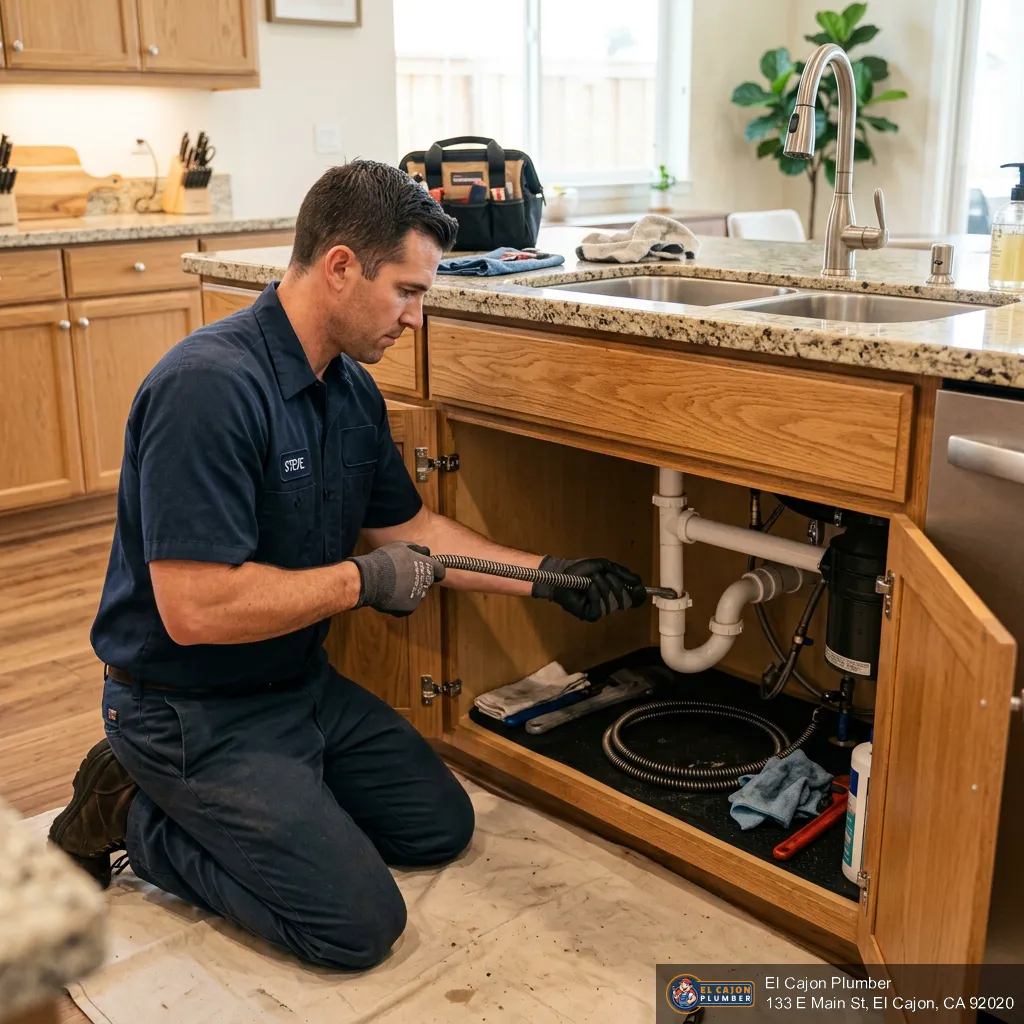
A motorized cable with a cutting head is fed into the drain line, physically breaking apart the clog and scraping buildup from the pipe walls. This is the standard approach for most residential drain clogs — kitchen sinks, bathroom drains, and toilet lines. It's effective, affordable ($150 to $300 for most clogs), and completely safe for every pipe material.
Hydro Jetting
For severe or recurring clogs — especially main sewer line blockages caused by grease, tree roots, or mineral buildup — we use hydro jetting: a high-pressure water system that blasts the interior of the pipe clean at up to 4,000 PSI. This doesn't just clear the clog; it restores the full diameter of the pipe. It's particularly effective in older homes across Santee, La Mesa, and El Cajon where decades of hard water deposits have narrowed the drain lines.
Camera Inspection
Before and after clearing a stubborn clog, we often run a sewer camera through the line to see exactly what caused the blockage and verify the pipe's condition. This identifies tree root intrusion, pipe bellies, collapsed sections, or other issues that will cause the clog to return if not addressed.
When to Call a Professional vs. DIY
Not every slow drain requires a service call. Here's a simple guide:
Try it yourself first:
- A single bathroom sink draining slowly — remove the stopper and clean out the hair trap
- A kitchen sink with standing water — try a plunger (not a chemical) with enough water to cover the bell
- A toilet that flushes weakly — a standard flange plunger usually resolves this
Call a plumber when:
- Multiple drains are slow or backing up simultaneously — this indicates a main line blockage
- Water backs up into a shower or tub when you flush a toilet
- The same drain clogs repeatedly despite clearing
- There's a sewage smell coming from any drain
- You see standing water near a cleanout or in the yard
5 Practical Tips to Prevent Drain Clogs
- Use mesh drain screens in every shower, tub, and bathroom sink to catch hair before it enters the drain system
- Never pour grease down the kitchen sink — even with hot water running. Collect it in a container and dispose of it in the trash
- Run cold water for 15 seconds after using the garbage disposal to flush food particles past the P-trap
- Flush drains monthly with boiling water (for metal pipes) or very hot water (for plastic pipes) to help prevent grease accumulation
- Schedule annual drain maintenance — a professional cleaning every 12 to 18 months prevents buildup from reaching the point of blockage
Dealing With a Stubborn Clog?
Our drain clearing specialists clear blockages the right way — no chemicals, no pipe damage. Same-day service available across East County, Santee, La Mesa, and all of East County.
Call (619) 853-8491Frequently Asked Questions
The Bottom Line
Chemical drain cleaners are one of those products that seem helpful on the surface but create bigger problems over time. They don't fully clear most clogs, they damage every type of pipe material, they're dangerous if they splash on skin or eyes, and they're terrible for septic systems.
A professional drain cleaning costs roughly the same as three or four bottles of Drano — and it actually solves the problem. If your drains are slow, backing up, or making gurgling sounds, a plumbing professional with a cable machine or hydro jetter can clear the blockage in under an hour and leave your pipes completely intact.


